
The definitive treatment for gas embolism with persistent symptoms — particularly neurological symptoms.
Hyperbaric oxygen therapy (HBOT) is the definitive treatment for gas embolism with persistent symptoms. It works through several complementary mechanisms.
Reducing bubble size
Increasing ambient pressure compresses gas bubbles, reducing their volume and the mechanical obstruction they cause (Boyle's Law).
Eliminating nitrogen from the embolus
Breathing 100% oxygen at elevated pressure creates large diffusion gradients: oxygen floods into the bubble while nitrogen is drawn out, accelerating bubble resolution far beyond what normobaric oxygen alone achieves.
Improving oxygen delivery
Hyperbaric oxygen substantially increases dissolved oxygen in the blood, improving delivery to ischaemic tissue in the penumbra surrounding the embolus.
Reducing cerebral oedema
Hyperbaric oxygen causes vasoconstriction in cerebral arteries, reducing intracranial pressure without reducing oxygen delivery.
Reducing inflammation
Hyperbaric oxygen inhibits leukocyte adhesion to damaged endothelium, improving microcirculation and limiting the secondary inflammatory injury that follows the initial ischaemic insult.
Time to treatment matters
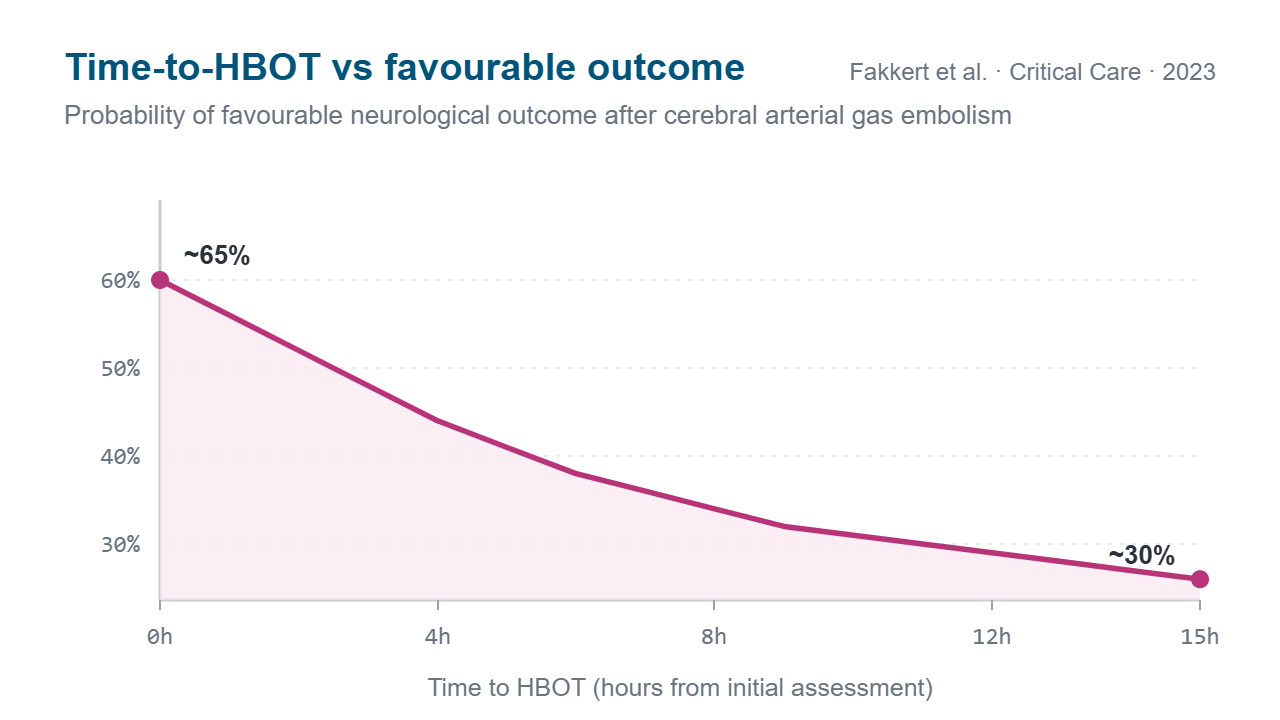
The best available evidence (Fakkert et al., Critical Care, 2023) shows that the relationship between time to hyperbaric treatment and outcome is a continuum, not a threshold. The probability of a favourable outcome is approximately 65% when treatment begins promptly, falling to around 30% by 15 hours. The NHSE HBOT Service Specification (2025) states that treatment should commence as soon as possible after initial assessment, where the patient is deemed suitable.
Late presentations: Delayed treatment should still be considered. Cases of clinical improvement following HBOT initiated more than 24 hours after the event have been reported. The decision to treat should be discussed with a Hyperbaric Physician.
Where is treatment available?
HBOT for gas embolism is provided by NHS-commissioned hyperbaric units with Cox Category 1 capability. Cox Category 1 units are equipped to receive and treat critically unwell patients — including those who are intubated, ventilated, or requiring advanced cardiovascular support — inside a hyperbaric chamber. Cox Category 2 units are not equipped to manage ventilated patients.
When you call the SPOA (020 4632 2377), your call is routed to the nearest available Category 1 unit automatically.